OUTDOOR LIVING · FROM J.R.’S DESK
What You Need to Know About Motorized Track-Mounted Outdoor Screens
Track-guided screens are becoming essential in high-end outdoor design. J.R. Peter explains what separates the best systems—and why the retention method matters most.

J.R. Peter, RLA
April 19, 2026
I’ve spent a lot of time designing outdoor rooms for families in Northern Virginia, and the same thing happens in almost every great project: everyone falls in love with the idea of living outside more than they actually can. On paper, the space looks incredible. In real life, heat, glare, humidity, bugs, pollen, and our unpredictable weather start calling the shots. That gap between how an outdoor space photographs and how it actually lives is exactly why I pay so much attention to motorized, track-guided screens. When they’re chosen well and integrated properly, they don’t just add convenience, they make the space usable in a way homeowners feel every single week.

What Is a Motorized Track-Guided Screen?
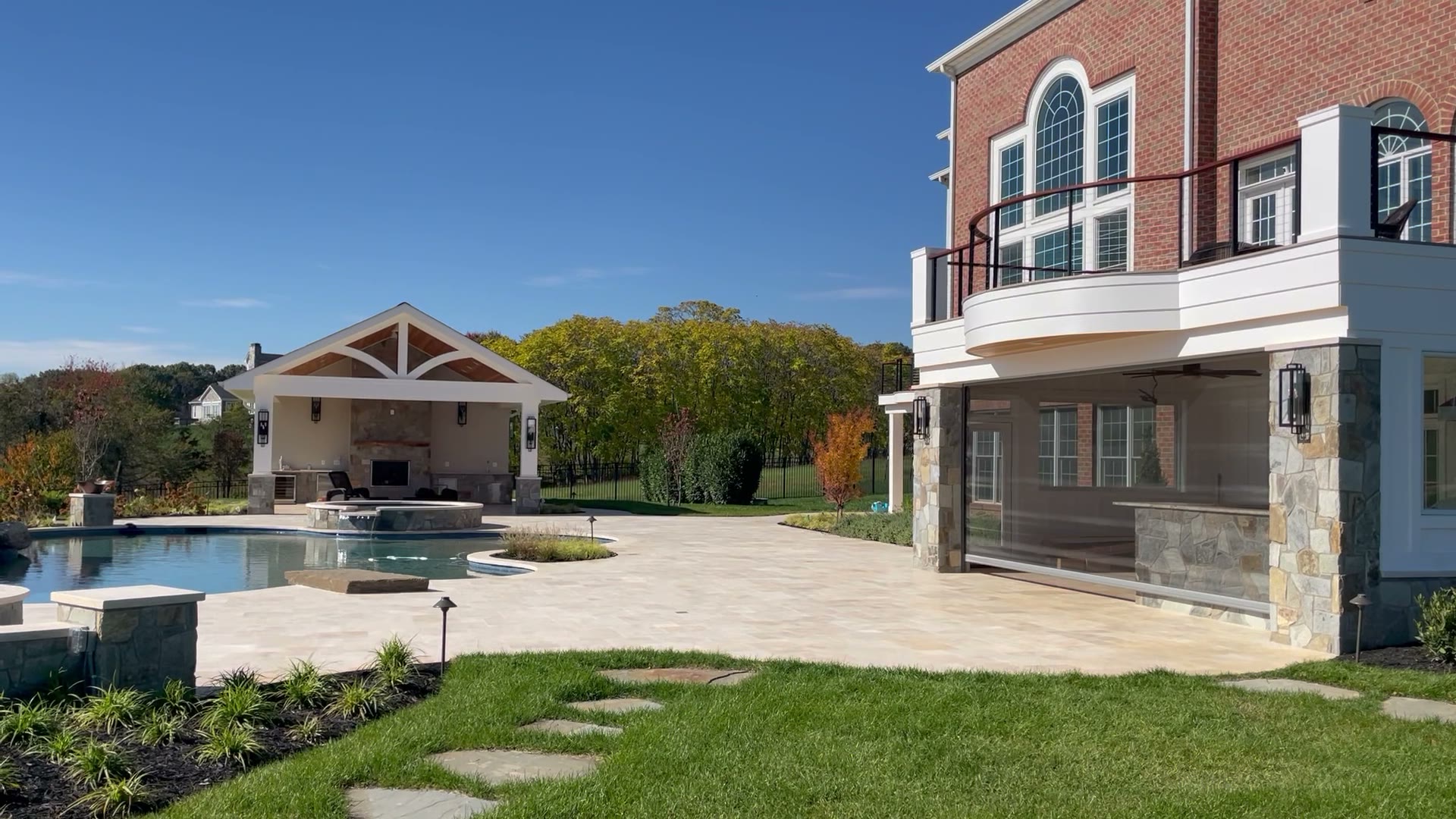
A motorized track-guided screen is a retractable exterior screen and/or shade system designed to move up and down within side tracks at the touch of a button. When deployed, the screens create a more controlled outdoor environment by helping manage sun, glare, insects, privacy, and in some cases wind or light weather exposure. When retracted, the screens disappear into a housing so the space can return to a more open feel.
These systems are commonly used in covered patios, porches, pergolas, lanais, outdoor kitchens, and other outdoor architectural spaces where homeowners want more flexibility without turning the area into a fully enclosed room. In high-end outdoor residential design, they are especially appealing because they can make an outdoor space feel more comfortable and usable without giving up the clean, open character that made the space feel resort-like in the first place.
What separates a track-guided screen from a simpler outdoor shade is that the screen is not just hanging freely. The edges of the screen are guided within side tracks as it moves. The tracks help to keep the system aligned, look cleaner, and perform more reliably across larger openings. That guided movement is a big part of what makes these systems feel more substantial, and in many cases more appropriate for serious outdoor living spaces ,than a basic shade solution.
What Makes It Different From Other Outdoor Shading Systems?
At a glance, motorized track-guided screens can seem similar to other outdoor shading products. They all promise some combination of comfort, convenience, and protection. But they do not all solve the same problems in the same way.
For example, a retractable awning is excellent for overhead shade, but it does little to address low-angle sun, insects, privacy, or exposure at the sides of a space. A basic drop shade may help with glare, but because it is not guided within a side track, it is noisier, more vulnerable to movement, misalignment, and has a less finished appearance, especially across larger openings or in more exposed conditions. Fixed screens or panel systems can offer protection, but they also create a much more fidgety and permanent visual.
Motorized track-guided screens allow a space to remain open when openness is the goal, then adds a stronger sense of enclosure and control when conditions call for it. They support the resort-like feel homeowners want, but they also respond to the realities of daily use.
Not all track-guided screens are built the same way. Once you look past the fabric, motor, and remote control, the real differences start to show in how the screen is retained within the side tracks—and how that system behaves over time. That is where performance, reliability, and design quality start to separate one solution from another.
Why the Retention System Matters
The most important part of a motorized track shade system is not the motor, the fabric or the colors – it’s the shade retention system. That’s right, I said it! The most important part of a motorized track-guided screen is how the shade is actually retained within the side tracks. That detail may not be obvious at first glance, but it has a major effect on how the system looks, how smoothly it operates, and how well it holds up over time.

In simple terms, the retention system is what keeps the screen edge moving in a controlled manner as the screen travels up and down. It also plays a big role in how the system responds to wind, shifting fabric tension, repeated use, and the minor imperfections that may result of less-than-perfect installation (more about this later). A screen that looks similar from the outside can behave very differently depending on how that edge is guided and held in place.
The shade retention system matters even more in larger openings and challenging weather where the shade must do more than just move. An outdoor motorized track shade must stay aligned, resist unnecessary wear, and avoid turning normal weather or regular use into a maintenance issue. A system that constantly needs adjustment, binds up under pressure, or feels flimsy in operation can quickly undermine the experience of the space around it. And not coincidentally, a poorly operating system in need of constant attention reflects poorly on the firm that recommended it . . . including Colao & Peter!
That is why the retention system deserves more attention than it usually gets. It is not just a hidden technical detail. It is a large part of what determines whether a motorized screen feels smooth, stable, and well-engineered, or just an expensive toy that’s hard to use.
The Three Main Approaches to Side Retention
While manufacturers use different names and proprietary language, most premium motorized screen systems fall into one of three general categories: zipper-track systems, fixed Keder or bead-in-channel systems, and magnetic self-tensioning systems.
Zipper-Track Systems
The screen edge is captured in the side track using a zipper-like retention method, helping keep the fabric guided and engaged along the full height of the opening. These systems are widely used and can create a taut, controlled appearance, though their long-term performance depends heavily on design quality, materials, and installation.

Guided Keder / Bead-in-Channel Systems
A formed edge that slides within a guide channel—think of a drapery panel moving in a concealed ceiling track. The screen edge is shaped to travel within a guide channel, keeping movement controlled and aligned. Depending on the manufacturer, this can range from a simple solution to a highly engineered one. Installation quality is critical.

Magnetic Self-Tensioning Systems
The patented MagnaTrack system uses a magnetically floating Keder channel inside a fixed, boxed aluminum frame. The channel can move up to ½” horizontally under pressure, then return to position as the load eases. This allows the screen to flex up to 1” under stress and self-recover—a unique quality among all three approaches. Preview the MagnaTrack system in this video.

What Really Matters When Choosing Between Systems
Opening Size
As openings get wider and taller, the screen has more surface area to manage, more exposure to wind and movement, and less margin for misalignment. Magnetic self-tensioning systems are often better suited to larger spans. Well-engineered Keder systems can also perform well. Zipper-track systems can struggle in large openings where their rigid mechanics are put under greater stress.
Tolerance for Maintenance
A magnetic self-tensioning system is designed to flex slightly under stress and return to position, reducing the chance of binding or turning small disturbances into service issues. Guided Keder systems can offer smooth, dependable movement when well executed. Zipper-track systems, in our experience, require more maintenance due to their more mechanical captured-edge approach.
Installation Quality and Long-Term Support
None of these systems are immune to bad field execution. At Colao & Peter we have gravitated toward the MagnaTrack system by Progressive Screens because we can design it into the initial plan, order the shades, and install them ourselves—ensuring they look beautiful, perform flawlessly, and require little post-installation maintenance. If there is ever a problem, you call the same people who measured, designed, installed, and taught you how to use the system.

The Real Takeaway
The best system is not simply the one with the most impressive marketing language. It is the one whose mechanics, scale, and operation are best matched to the demands of the project. For larger openings and more demanding conditions, systems that manage movement gracefully have an advantage. For homeowners who care about long-term ease of ownership, forgiveness and service tolerance matter. And in every case, installation quality remains a major part of whether the system ultimately feels premium or problematic. Thinking about an outdoor oasis that lives like a world-class resort? Give us a call. We would love to chat about how motorized track-mounted shades can transform your outdoor space.
Ready to Talk?
Schedule a Consultation
We design, supply, and install MagnaTrack motorized screens. One call covers everything.
Get in TouchCome, let’s take a walk together.
Thinking about motorized screens for your outdoor space? We design, supply, and install. One call covers everything.